
-739-384.png)
AlertesPour vous tenir informé des messages importants de la ville! |
2026-10-21
Le 21 octobre 2026 - Interruption du service d’alimentation en eau potable ET avis d’ébullition d’eau pour certaines adresses sur Sainte-Marie, Hymus, Frank-Toope et l’Autoroute TranscanadienneInterruption du service d’alimentation en eau potable ET avis d’ébullition d’eau pour certaines adresses sur Sainte-Marie, Hymus, Frank-Toope et l’Autoroute Transcanadienne
Le 21 octobre 2026 - Interruption du service d’alimentation en eau potable ET avis d’ébullition d’eau pour certaines adresses sur Sainte-Marie, Hymus, Frank-Toope et l’Autoroute TranscanadienneAvis aux résidences concernées:
En raison des travaux en cours liés au projet de développement Livéo, une interruption temporaire du service d’alimentation en eau potable est prévue le MERCREDI 21 octobre, entre 9h et 15h pour les adresses ci-haut mentionnées. En prévision de ces travaux, il est conseillé de se constituer une réserve d’eau pour suppléer à ses besoins de consommation pendant la période d’interruption. Dès le rétablissement du service d’alimentation en eau potable, un avis préventif d’ébullition d’eau sera en vigueur jusqu’à nouvel ordre. Avis préventif d’ébullition d’eauCONSIGNES:
VOUS POUVEZ UTILISER L’EAU DU ROBINET NON BOUILLIE POUR :
Levée de l’avis d’ébullitionDes échantillons d’eau seront prélevés à différents endroits et soumis à une analyse en laboratoire. L’avis préventif d’ébullition d’eau sera levé dès que nous aurons reçu les résultats de ces analyses. Consultez la section Alertes du site Web afin de connaître la date de levée de l’avis d’ébullition de l’eau. Des questions?Pour tout renseignement complémentaire, veuillez composer le 514 694-4100. Merci de votre compréhension. |
Info-TravauxRestez informés des travaux réalisés sur le territoire de la Ville, qu’il s’agisse de réfections routières, d’entretien des infrastructures, de travaux sur le réseau d’aqueduc ou de réaménagement de parcs. Pour toute question ou pour signaler un problème lié à des travaux, veuillez composer le 514 694-4100. |
2026-10-09
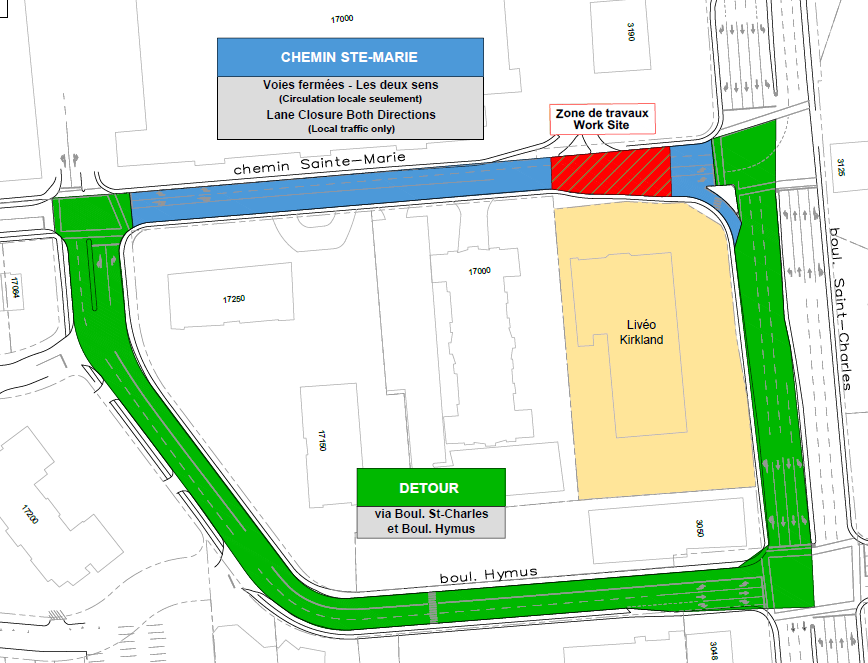
Fermeture du chemin Sainte-Marie du 13 au 23 octobreLe chemin Sainte-Marie situé entre le boulevard Saint-Charles et la première entrée du centre commercial Walmart sera complètement fermé à la circulation du mardi 13 octobre au vendredi 23 octobre inclusivement.
Fermeture du chemin Sainte-Marie du 13 au 23 octobreDans le cadre de travaux réalisés par l’entrepreneur Sotramont, le tronçon du chemin Sainte-Marie situé entre le boulevard Saint-Charles et la première entrée du centre commercial Walmart sera complètement fermé à la circulation du mardi 13 octobre au vendredi 23 octobre inclusivement. Malgré cette fermeture, l’accès au centre commercial où se trouve le Walmart et aux stationnements souterrains des immeubles résidentiels situés sur le chemin Sainte-Marie demeurera possible par le boulevard Hymus Est. Une signalisation de détour sera mise en place afin de guider les automobilistes. Nous remercions les citoyens et les commerçants du secteur de leur compréhension et de leur collaboration pendant la durée des travaux.
|
|
2026-08-28
Éclairage de rue - Remplacement des lampadairesNature des travaux : Remplacement de lampadaires afin de convertir l’ancienne source d’éclairage au DEL.
|
|
|
2026-06-29
Reconfiguration de la voie d’insertion au boulevard Saint-Charles Sud à l’intersection du chemin Sainte-Marie EstReconfiguration de la voie d’insertion au boulevard Saint-Charles Sud à l’intersection du chemin Sainte-Marie Est à compter du 29 juin.
|
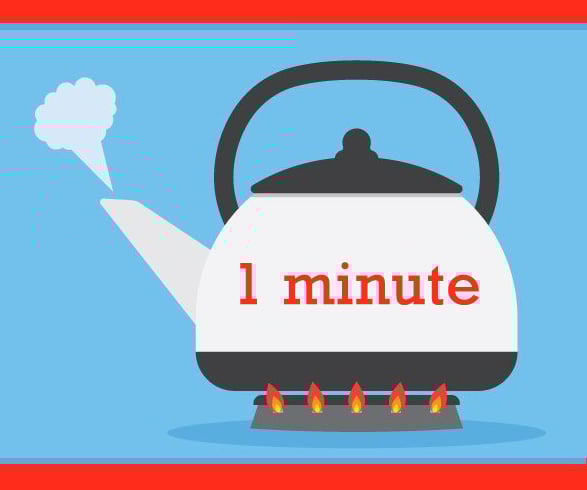 Vous devez faire bouillir l’eau du robinet (à gros bouillons) pendant au moins 1 minute avant de la consommer ou utiliser de l’eau embouteillée pour :