

-739-384.png)
AlertsTo keep you informed of important messages from the city! |
2026-10-21
October 21, 2026 - Drinking water supply interruption AND boil water advisory for certain addresses on Sainte-Marie, Hymus, Frank-Toope and Trans-Canada HighwayDrinking water supply interruption AND boil water advisory for certain addresses on Sainte-Marie, Hymus, Frank-Toope and Trans-Canada Highway
October 21, 2026 - Drinking water supply interruption AND boil water advisory for certain addresses on Sainte-Marie, Hymus, Frank-Toope and Trans-Canada HighwayNotice to affected residences:
Due to ongoing work related to the Livéo development project, a temporary interruption of the drinking water supply is scheduled for WEDNESDAY, October 21, between 9 am and 3 pm, for the above-mentioned addresses. In preparation for this work, we recommend to stock up on potable water to meet consumption needs during this period.
Once water supply is restored, a preventative boil-water advisory will be in effect until further notice. Preventative Boil-Water Advisory
Please note that you must boil your tap water (bringing it to a bubbling boil) for at least 1 minute before drinking it, or use bottled water for:
YOU MAY USE UNBOILED TAP WATER TO :
Lifting of the boil-water advisoryWater samples will be collected from various locations and submitted for laboratory analysis. The boil-water advisory will be lifted once we receive the results of these tests. Please consult the Alerts section of the website for updates regarding the lifting of the boil water advisory. Questions?If you require additional information, please call 514 694-4100. Thank you for your understanding. |
Works InfoStay informed about the work being carried out in the city, whether it involves road repairs, infrastructure maintenance, work on the water network, or park redevelopment. For any questions or to report an issue related to the work, please call 514-694-4100. |
2026-10-09
Closure of Chemin Sainte-Marie from October 13 to 23Chemin Sainte-Marie between Boulevard Saint-Charles and the first entrance to the Walmart shopping centre will be completely closed to traffic from Tuesday, October 13 to Friday, October 23, inclusive.
Closure of Chemin Sainte-Marie from October 13 to 23As part of work being carried out by contractor Sotramont, the section of Chemin Sainte-Marie between Boulevard Saint-Charles and the first entrance to the Walmart shopping centre will be completely closed to traffic from Tuesday, October 13 to Friday, October 23, inclusive. Despite the closure, access to the shopping centre where Walmart is located, as well as to the underground parking garages of the residential buildings on Chemin Sainte-Marie, will remain available via East Hymus Boulevard. A detour route will be clearly marked to guide motorists. We thank residents and businesses in the area for their understanding and cooperation throughout the duration of the work.
|
|
2026-08-28
Street Lighting – Replacement of lamppostsNature of the work: Replacement of lampposts to convert the old lighting source to LED.
|
|
|
2026-06-29
Reconfiguration of the merge lane onto Saint-Charles Boulevard South at the Sainte-Marie Road East intersectionReconfiguration of the merge lane onto Saint-Charles Boulevard South at the Sainte-Marie Road East intersection, starting June 29.
|
 RECOMMENDATIONS: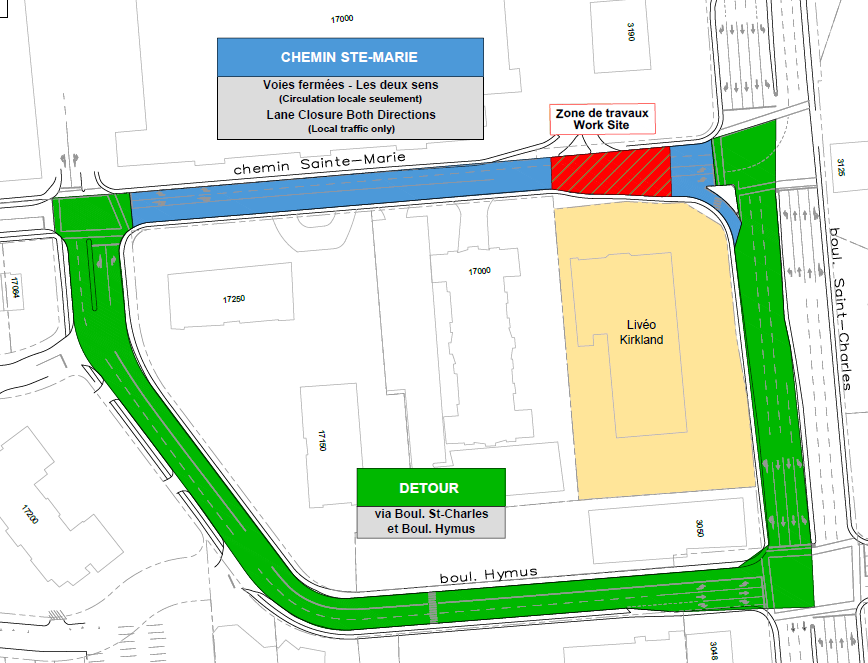

Sand wasps
Timid and beneficial!
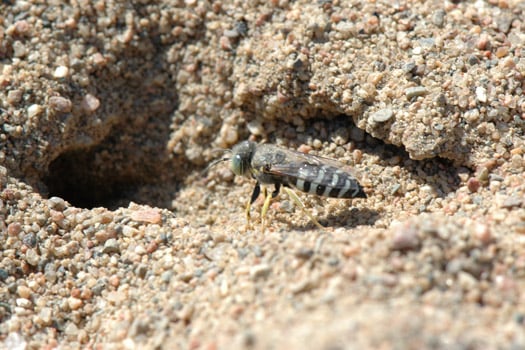 What are these black and white insects hovering over our sandboxes in the summer? They are called sand wasps. They are most noticeable during July and August. Measuring less than two centimetres, they are black and yellow or black and white. As solitary insects, they do not build nests but lay their eggs directly in the sand.
Tolerating their presence
For more information
By email: [email protected]