
-739-384.png)
Works InfoStay informed about the work being carried out in the city, whether it involves road repairs, infrastructure maintenance, work on the water network, or park redevelopment. For any questions or to report an issue related to the work, please call 514-694-4100. |
2026-10-02
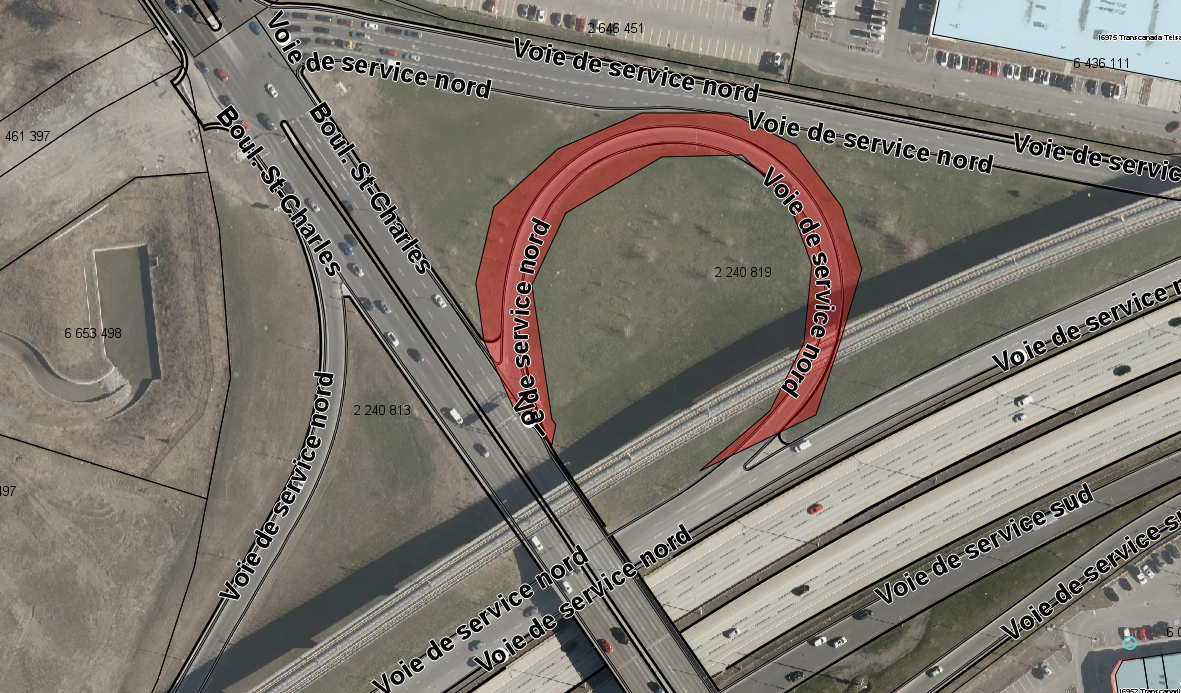
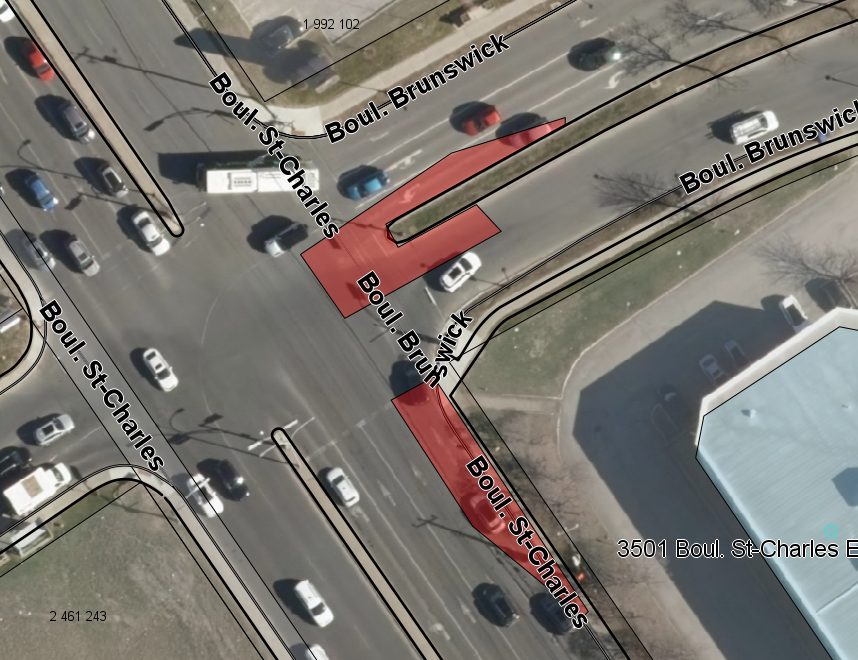
Westbound Highway 40 On-Ramp ClosureOctober 2 : Westbound Highway 40 On-Ramp Closure
Westbound Highway 40 On-Ramp ClosureWhen? As part of roadwork operations, the westbound Highway 40 on-ramp from Saint-Charles Boulevard North will be closed from 9:30 p.m. to 5 a.m. A detour will be in place via Brunswick Boulevard to allow motorists to access westbound Highway 40. Road users are encouraged to plan their trips accordingly and follow the temporary signage in place. Thank you for your understanding.
|
|
2026-10-02
Traffic Disruptions on Saint-Charles BoulevardFriday, October 2, 2026, starting at 8:30 p.m.
Traffic Disruptions on Saint-Charles BoulevardWhen?
As part of work to replace certain sanitary sewer and stormwater system infrastructure, temporary lane closures will be in effect on Saint-Charles Boulevard:
The work is expected to last approximately one hour, after which the lanes will be reopened to traffic. Thank you for your understanding.
|
|
|
2026-10-02
Traffic disruption on Saint-Charles Boulevard South – Work by ÉnergirTraffic disruption on Saint-Charles Boulevard South (Work by Énergir), from Friday, October 2 at 9 pm to Sunday, October 4...
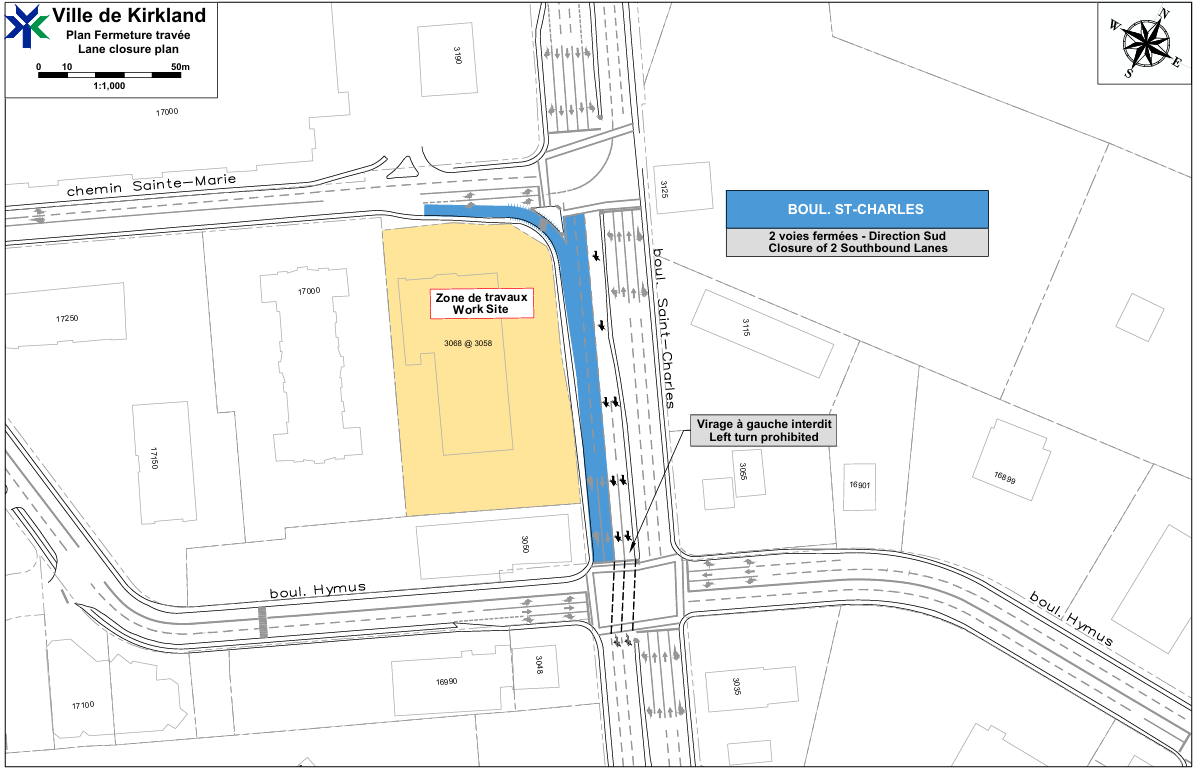
Traffic disruption on Saint-Charles Boulevard South – Work by ÉnergirDates: Friday, October 2, starting at 9 p.m., to Sunday, October 4 Location: 3068 Saint-Charles Boulevard Nature of the work: Énergir will carry out work on Saint-Charles Boulevard South to install a natural gas network that will serve the Liveo residential development. Expected traffic disruptions: Two southbound lanes on Saint-Charles Boulevard will be closed between Sainte-Marie Road and Hymus Boulevard. Left turns onto Hymus Boulevard will be prohibited. Road users must follow the signage in place. Police officers will be present at the intersection of Saint-Charles and Hymus boulevards. Information: 514-694-4100, extension 3411 514-630-1234 (outside regular office hours)
|
|
|
2026-08-28
Street Lighting – Replacement of lamppostsNature of the work: Replacement of lampposts to convert the old lighting source to LED.
|
|
|
2026-06-29
Reconfiguration of the merge lane onto Saint-Charles Boulevard South at the Sainte-Marie Road East intersectionReconfiguration of the merge lane onto Saint-Charles Boulevard South at the Sainte-Marie Road East intersection, starting June 29.
|

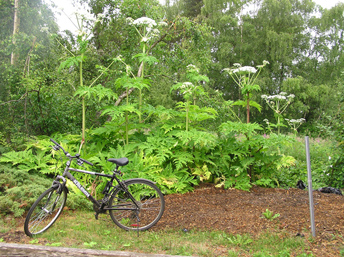
Giant hogweed
A giant plant to avoid!
How to correctly identify the plant
Giant Hogweed
|
Indian Celery or Cow Parsnip
|
|
Plant Height 2 to 4 metres |
Plant Height 2 metres or less |
|
Stem Rigid (5 to 10 cm (2 to 4 in.) in diameter) |
Stem Rigid (5 cm (2 in.) in diameter or more) |
|
Leaves Generally smooth, the leaves can measure up to 1.5m across. The leaf underside is green. Hairs, when present, are stiff and parse. |
Leaves Smaller, the leaves measure up to 50 cm (2.5 ft) across. The underside is generally covered in soft white hairs for a velvety, light green (greyish) appearance. |
For more information
For information on health effects and what to do if you have been in contact with giant hogweed sap, contact Info-Santé (8-1-1).
Other reference sites
Ministère du Développement durable, de l’Environnement et des Parcs
Website: http://www.mddep.gouv.qc.ca/biodiversite/nuisibles/berce-caucase/index.htmWebsite:
http://www.web2.mnr.gov.on.ca/mnr/Biodiversity/Invasive_Species/Giant_Hogweed_Fact_Sheet_F.pdf